the cheery pop of color you’re looking for

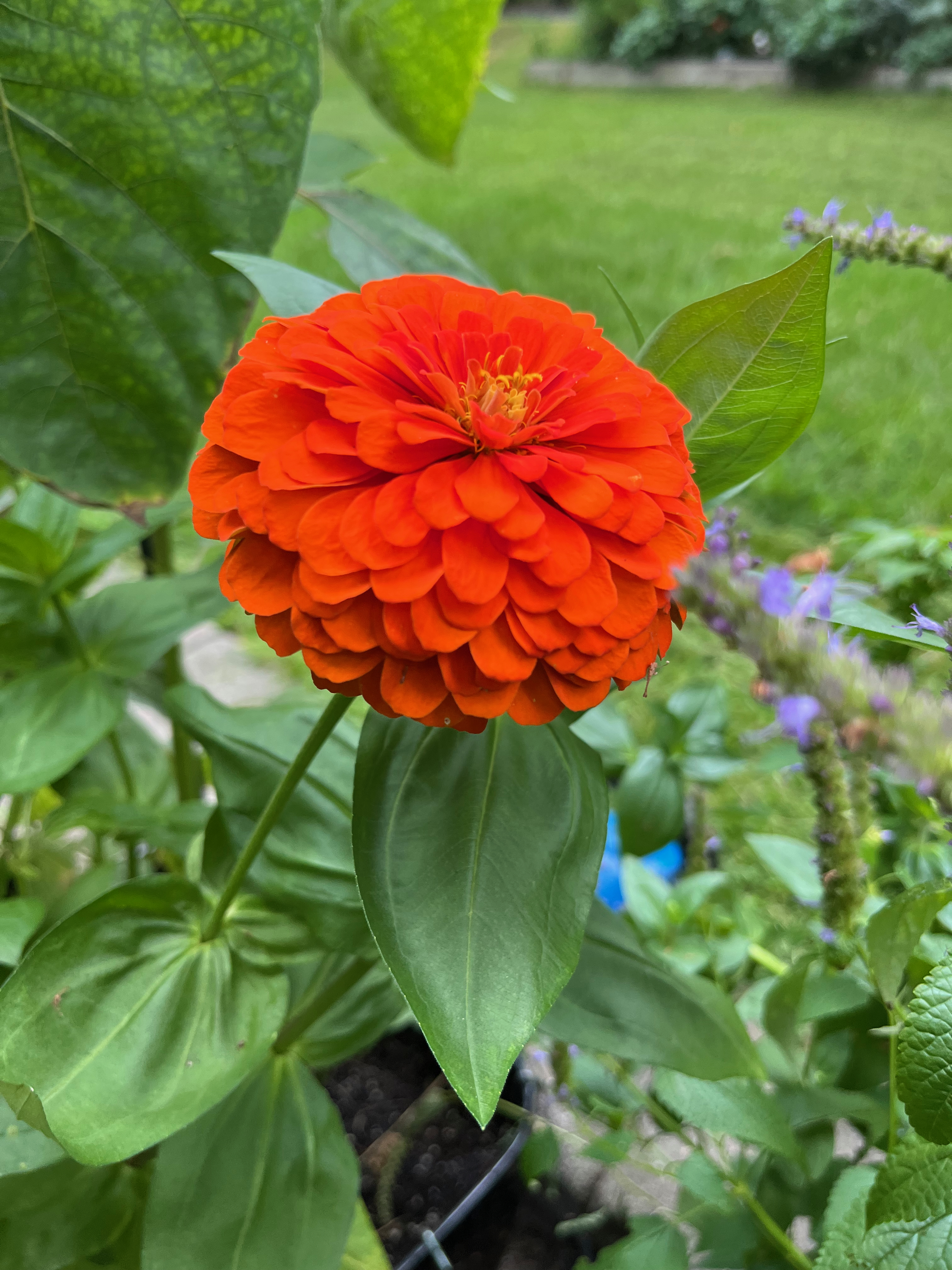
ok, i love zinnias. it’s june 29 and i’m anticipating mine popping open any day now. the rows and rows of petals. some a solid color; others an ombre from center to outer petals. i can’t wait. so i’ll write about them in the meantime.
there’s so many varieties that i’ll talk about. i haven’t tried growing all of them. i have my favorites. you will too. but let’s talk about growing them first. unlike dahlias and chrysanthemum that need more attention throughout the whole growing season (and need to be dug up if you live somewhere where the ground freezes), zinnia don’t need to be fussed over. scatter the seeds and let them do their thing (basically). but let’s get into some background and growing basics…

zinnia are classified in the Asteraceae family, which also includes daisies, echinacea (coneflower), cosmos, sunflowers, yarrow, rudbeckia, and so many more. this family is huge (thousands of flower types) and found all over the world. they can feed us and animals. they can help with erosion control – their taproots can help hold soil in place, and are especially helpful in places where other plants struggle with poor soil.
zinnia specifically are heat-loving herbaceous annual flowers native to Mexico. seed can be direct sown in the garden or landscape after the danger of frost has passed in spring (my personal method), and it can also be started indoors 4 to 6 weeks earlier – they germinate at 65 to 70 °F. all zinnia are considered “cut and come again” because if you cut a bloom, the plant then redirects the energy to creating more blooms.
there’s several varieties, the most common one being Zinnia elegans. i’ll list some specific ones here, but know there’s so so many out there, so many colors, heights, blossom size. find the ones that make you stop and smile. if i’ve grown them myself, i’ll post a photo.
Queeny series

bred by Hugo Dittmar, who received several All-America Selections winners with this series. over the years, as Dittmar developed new colors in the series, he transitioned the series name from “Queen” to “Queeny.”
Height: 20-30”
Bloom size: 2–3½”
Colors: Red Lime, Lime with Blush, Lemon Peach, Lime Orange, Pure Orange
this is absolutely one of my favorites. there is a faded, vintage tinge to all the colors, except Pure Orange (which i haven’t grown). very long-lasting blooms. taller, straight stems, so they look good in a cut flower bouquet.
Benary’s Giant

a wide variety of colors bred into this series from German plant breeder Benary.
Height: 40-50”
Bloom size: 4-6″
Colors: Bright Pink, Carmine Rose, Coral, Deep Red, Golden Yellow, Lime, Orange, Purple, Salmon Rose, Scarlet, White, Wine, and a mix
these blooms are HUGE! very solid color throughout the bloom’s life. i personally love darker colored blooms, and they deliver. eye-catching in a garden, especially paired with a spikier plant like salvia or hyssop.
Floret Originals

this family-owned farm has been working on a rainbow of pastel colors, a rarity in zinnias.
Height: 48-56” except Little Flower Girl (38-60”)
Bloom size: 3-5″ except Little Flower Girl (1-2”)
Colors: (descriptions from the Floret site)
Alpenglow – the softest range of creamy linen, pale peach, and dusty rose flowers, with an unusual iridescent lavender ring around their striking purple eyes. as flowers age, their petal tips turn a muted rosy pink.
Golden Hour – named for the hour before the sun sets on the horizon, in a range of warm honey and cantaloupe shades that look as if they are glowing.
Little Flower Girl – miniature flowers in shades of blush, soft pink, pale peach, and champagne.
Precious Metals – shades of linen, icy lavender, pale pink, soft peach, and palomino. as flowers age, the lower petals often fade to turquoise dusted with lavender, giving blooms an icy metallic quality. to experience their full range of coloring, allow flowers to mature on the plant.
Unicorn Mix – an enchanting range of colors, including raspberry, tangerine, magenta, lemon, apricot, dusty lilac, and blush—all with striking lavender centers. what makes these flowers so unique is that they have a multitoned ombre effect and many of the blooms possess a rainbow-like quality. to experience their full range of coloring, allow flowers to mature on the plant.
Victorian Wedding – color range of buff, pale peach, rose-pink, blush, and the occasional soft orange.
Floret has been working on their own series of zinnia (and celosia and dahlia seed), specifically breeding pale color schemes that florists and wedding decorators are looking for. they also have a blog and library on their website, and YouTube channel. they’re very focused on education as well as breeding and seed production.
Dawn Creek Farms

they started with providing cut flowers for their local floral designers. from their website: “the goal of our farm’s breeding program is to get seeds into the hands of the people who will love them, nurture them, sing their song, appreciate their beauty, and then save their seeds to plant again and again. in this way both the plants, and the people that love them, have hope for the future.”
Height & Bloom Size: they’re still refining their varieties, but most are going to be medium-tall with an average bloom head, good for cut flower bouquets.
Colors: Blush, Pearl Blush, Aura, First Light, Chiffon, Coral Sky, Toffee, Breeding Mix, and Tufted Mamas Mystery Mix
support these small, family-owned farms!
Oklahoma series

a well-bred series with well formed blooms, a good height for cut flowers, and fairly resistant to powdery mildew.
Height: 30-40”
Bloom size: 1 ½ – 2 1/2″
Colors: Carmine, Golden Yellow, Ivory, Pink, Salmon, Scarlet, White
Zinnia haageana
the native to Mexico. shorter height (20-30”) and smaller blooms (1–2″). varieties include Persian Carpet, Aztec, and Jazzy Mix.
Zinderella
a scabiosa-type bloom. unusual in zinnias, and not for everyone. but very striking in the garden and in bouquets.
Height: 24-36”
Bloom size: 2 – 2 1/2″
Colors: Peach is the original, but some breeders are developing other colors like pink and lilac.
Zahara and Double Zahara
disease-resistant, compact, dwarf plants for garden beds and containers. More bushy than tall-stemmed. Many colors to choose from.
there’s so many more, but this would end up being three times as long. i hope you consider growing zinnia. i love that they’re easier to grow and will give you these beautiful swaths of color from early summer through the frost. you can find zinnia seeds anywhere, but consider spending a little more to support the smaller farms who are breeding new color and life into this long-standing classic.


Leave a Reply