aka you can do it, just not how everyone demands it
“Grocery stores are too expensive. Grow your own food!”
“Get the house. Work remote. Start homesteading. Start a garden. Buy chickens. Grow your own food. Stop buying medicine and make it.”
“If you’re not growing your own food, you’ll be suffering in the food shortage that will hit us in [insert your favorite timeframe here – I usually see six months]”
“GROW YOUR OWN FOOD!!!!!!!!!!!!!!!!!”
. . . or not. or maybe a container or two. and also throw an herb and a flower in there (more about that last part later)
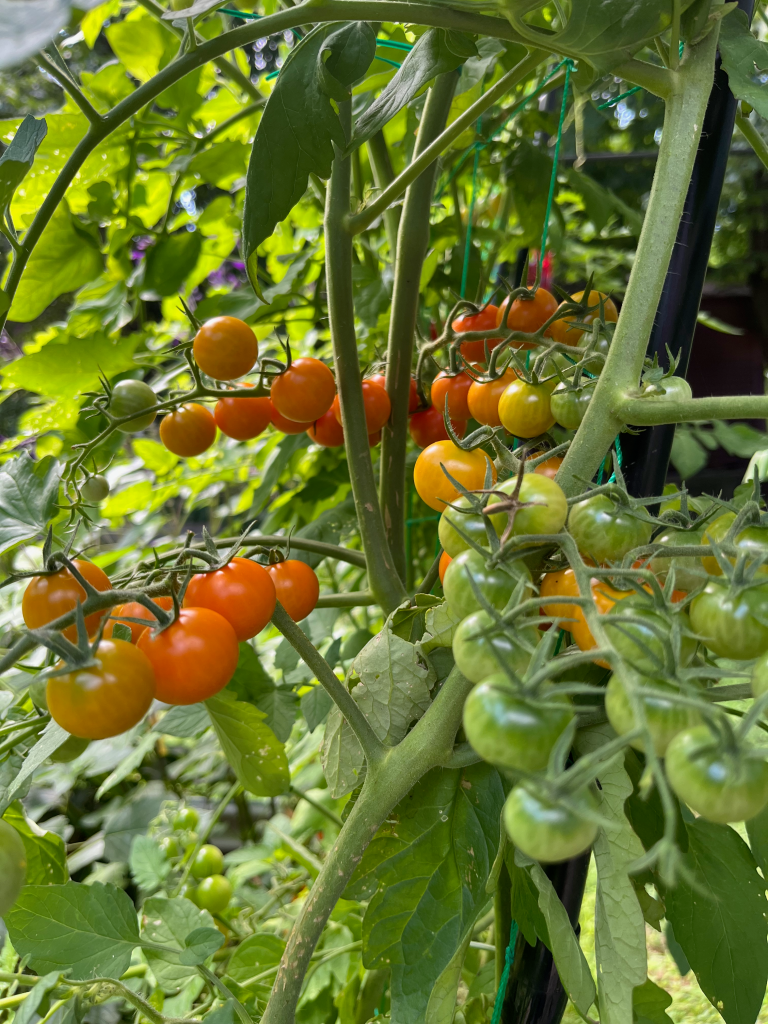
there’s something so self-righteous about demanding people grow their own food. it’s the same kind of rigid thinking as people should only be growing native plants. as if there’s only one right way to do something. a moral high ground that you can hoist yerself up on and lord over others. pull yerself up by your bootstraps! f that nonsense.
i’d also like to see people attempt to grow food in the ground, in rocky clay New England, in the months when the ground is frozen, which is 3-5 months out of the year. if you think i’m talking nonsense, go read up on how well the Pilgrims did when they showed up on Wampanoag land.
personally, i’ve mostly had small spaces over the years. Containers and raised beds were a go-to, especially in Philly where we only had cement pads out front and in back. I’ve grown plants in containers that trip people up when I tell them – lilac (there’s compact varieties), hollyhocks, and moonflower (trellises can fit anywhere!) are a few. growing in containers have a few special requirements that you need to be mindful of, but otherwise it’s like growing in the ground.
the necessities – container, soil, plants – and how to do this on the cheap
this is the big hurdle that stops people before they start. the initial output of money for containers, soil, fertilizer, and plants. yes, it can be expensive if you’re going for the fancy beautiful planters, or a large raised bed. And if you’re filling up that raised bed with bags of soil? YIKES.
The price of plants has gone up exponentially. I noticed it rising way more since 2020, when so many people stuck at home decided to start gardening (if that’s you, welcome!). I remember so many plants I usually had no problem finding were sold out as soon as they went on sale. so, some growers planted many more for the following year, which means they had to raise prices to cover their costs. some larger companies raised prices because they saw the demand and knew they could get away with it.
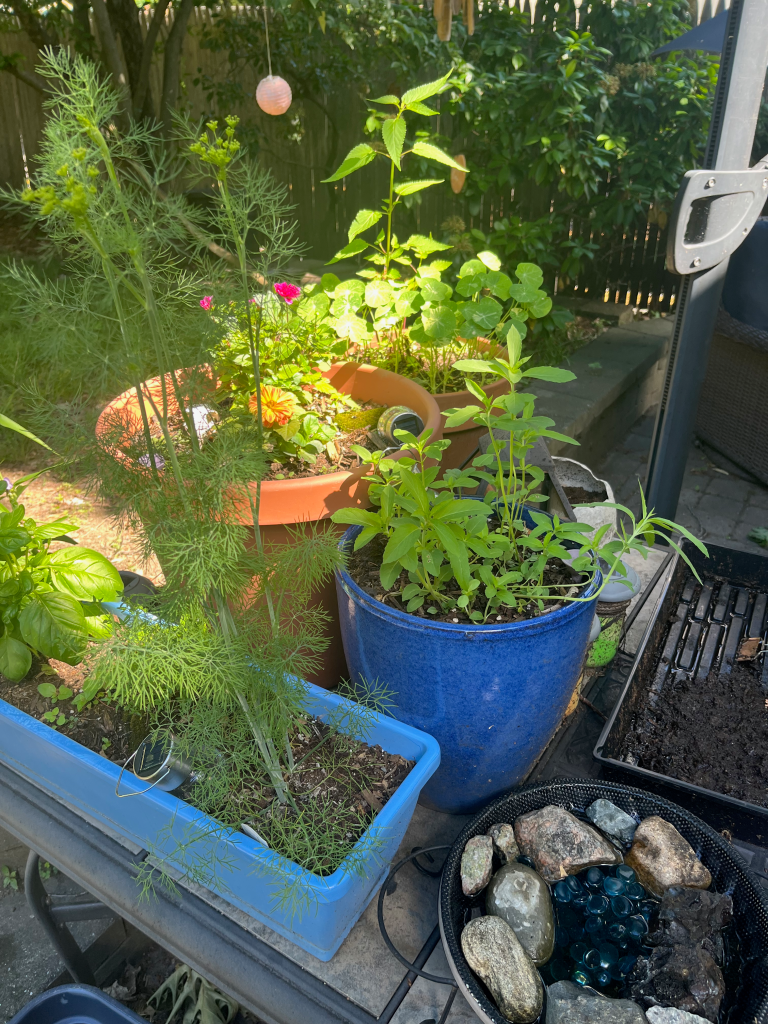
to do this part more affordably, there’s quite a few options:
- check your local buy nothing group or community garden for items being given away. I’ve gotten many of my containers this way. They weren’t free, but they were cheap. and if you can only get your hands on grey or beige plastic and want something more whimsical, you can gussy them up with some sandpaper and spray paint (I got Rust-Oleum Painter’s Touch 2x Ultra Cover because it’s paint and primer in one. I’m too lazy to do multiple steps of paint). The sandpaper roughs up the surface so the paint sticks to it better. I painted the container shown above three years ago. It stays out all year round and still looks great.
- People will give seedlings away. All my veggie plants this year were people who gave me their extra tomato, zucchini, eggplant, and cucumber plants that they grew from seed. I knew they’d be healthy plants because they were master gardeners who have been growing plants from seed for decades.
- Check Little Free Libraries for seed packets. I have two near me that fill up with seed packets every spring. Some libraries also give away seed packs. and dollar stores have seeds too. yes, seeds take some forethought and planning, but it’s so much cheaper in the long run, and you can save the seeds from this year’s harvest to grow next year.
- I wouldn’t take free soil unless there’s a recent soil test with it. you don’t know if that soil is healthy, houses any pests, or what the seed bank is in there. you don’t want to end up needing to add a bunch of amendments and fertilizer to get the soil balanced for growing, or have jumping worms or a ton of weeds by the time summer hits. You definitely don’t want jumping worms *shudders*
For a couple of smaller pots, I’d bite the bullet and buy a bag or two of POTTING SOIL. It will start your containers off right with the correct balance of nutrients. And no Miracle Grow garbage. Do a search for “Miracle Gro class action lawsuit” for multiple reasons why. Get something good. Buying good soil is like buying a better quality shoe – you want that better base because it will last longer and keep you (or the plant) healthy. Sometimes soil goes on sale, like at the end of a season (try mid to late summer or fall) or around a holiday (Memorial Day or Mother’s Day), so keep an eye out for those.
To fill up a larger planter or raised bed, you can use a modified Hügelkultur method, which layers larger branches at the bottom, followed by grass clippings/manure, then twigs, more clippings, and then finally soil and compost. I did that for two raised beds, and I’ll share it when I post it to my YouTube channel. I found branches all over my neighborhood. I’m sure people were wondering why I was dragging branches down the sidewalk.
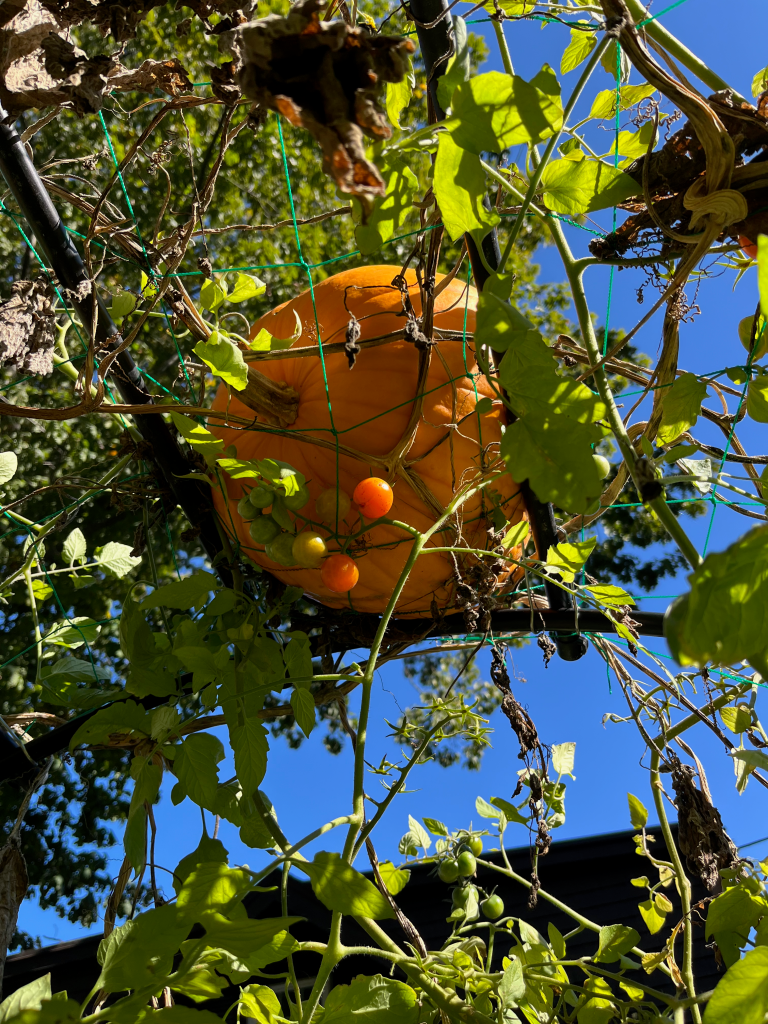
the next blog will talk about planting vertically, options when you have physical limitations, and options for veggies, herbs, and fruit. please join the email list (see below) to get new blog posts delivered directly to your inbox.

Leave a comment