Why plan and plant NOW for next year?

It starts with little shoots. Some the bright chartreuse of new growth. Some the deeper emerald green of an established plant ready to start a new growth cycle. The center stalk thickening, plumping up to open wide and show the world its beauty. Little indigo windflowers, petals like little children draw, their cheery yellow centers following the sun each day. And then the proud hardy daffodils. The pert bulbous hyacinth in their blush, their lilac, their blonde, sending an earthy bouquet into the gentle breeze. Tulips in every color, height, and petal shape you can imagine – brightest red, maroon into flame orange into cantaloupe, deepest inky-purple ‘Queen of the Night.’ Double sets of petals that look more like a peony than a tulip. Checkerboard fritillaria, those lilies in disguise, looking more like a drooping tulip. Then the shrubs and trees starting their fireworks with blooms to bring the bees and birds.
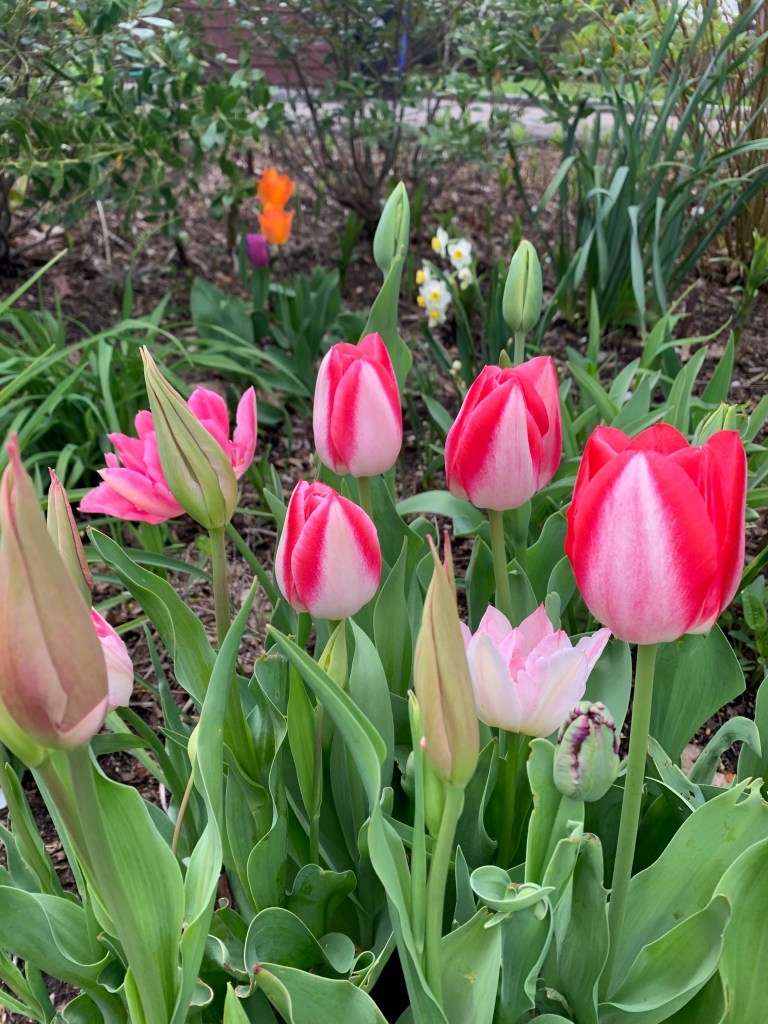
That’s spring in my backyard. I do admire the stark beauty in a New England winter, silent and cold. But that spring issue of color and scent, that brings the buzzing of happy insects, is a happy respite. And almost all of those plants are bulbs planted in the autumn.
An important thing to note – all the plants I talk about here are not all true “bulbs.” Tulips and daffodils are, but irises (rhizomes) and crocus (corms) are not. But just like we have common names for all the common plants we talk about (e.g. Narcissus are daffodils), calling all of them bulbs is completely acceptable.
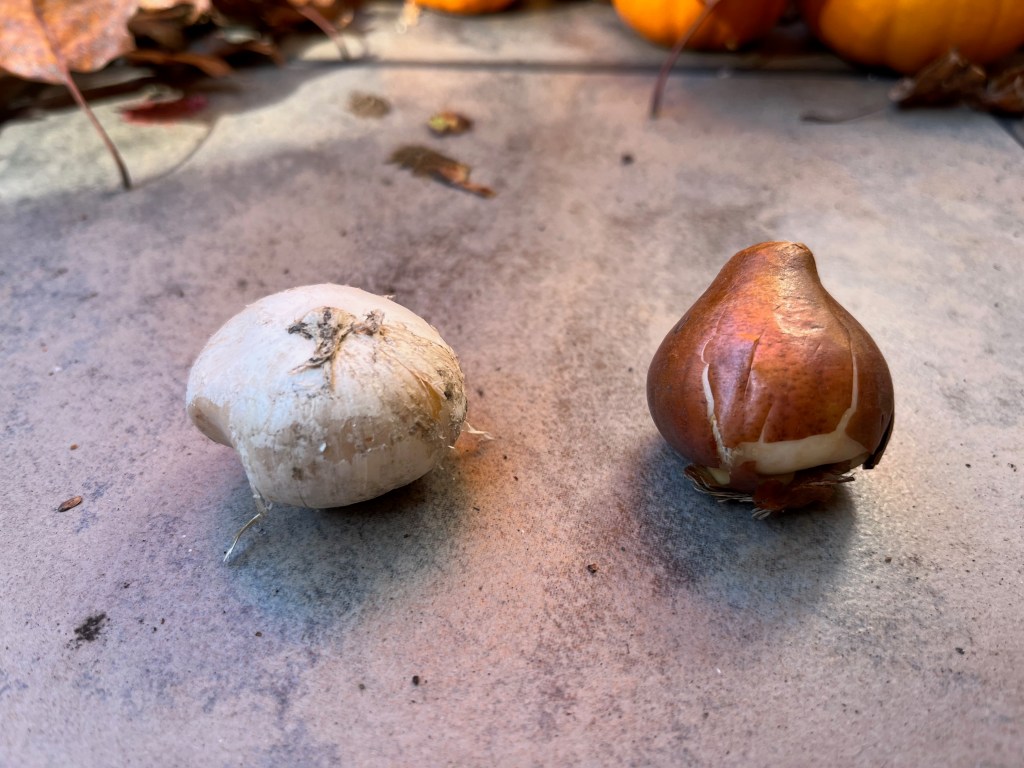
Notice I am only talking about bulbs. Seeds are a whole different level of dedication and fun. I’ll be doing a live webinar in January about choosing seeds for your garden, just in time for all the gorgeous seed catalogs that will be hitting your mailbox. Look out for more details in December.
I’ll share my plans for next spring later on, because I want you to focus on what would make YOU happy to see in your front yard, your back garden, your planters as the days get longer and warmer again.
Planning It Out
So many options. So little space.
I’m only half joking. There’s so many different types of flowers and colors when it comes to spring and early summer flowers. For those of us covered in snow for most of the winter, those first pops of color breathe life into us. Little snowdrops poking out from melting snowdrifts. Carpets of purple crocus stretching from garden into lawn. And then the sweet-earthy scent of pastel hyacinth you need to bend to their level to enjoy. Tulips tall and colorful. The endless deeply colored rosette of a just-blooming ranunculus.
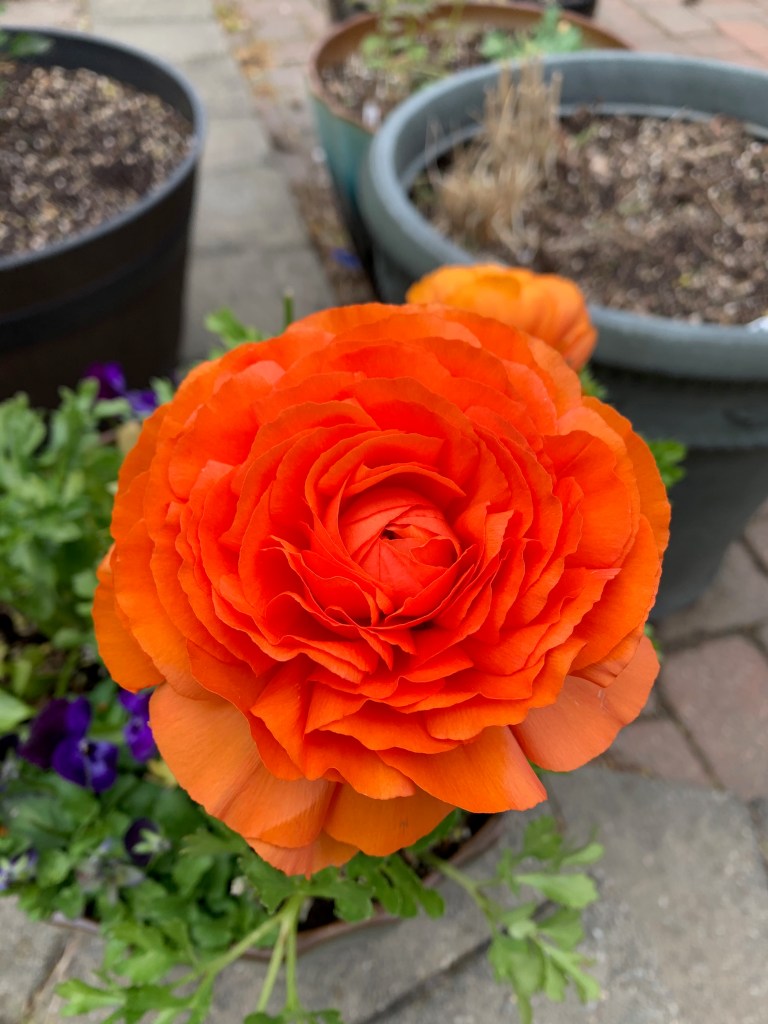
Yes, you could plant a couple of each of these, and I have done that in my earlier years of gardening, but with so many different plant heights and bloom times, I never got the spectacular color show I was hoping for. It doesn’t matter what size your planting area is – it can even been a collection of pots – what matters is the answers to these questions:
- When do you want blooms?
- What color(s) do you want?
- Are there any particular flowers you absolutely have to have?
When do you want blooms?
Surprisingly, this is a huge consideration. Do you need bright colors as soon as the snow begins to melt? Or is May the month you can enjoy your blooms the most? Tulips have early, middle, and late season varieties, so you can enjoy them for a short window, or plant similar colors in each seasonal variety for cheeriness all spring.
What colors do you want?
I’m a purple-orange-yellow gal. I like a regal looking garden. You may love how red flowers pop against the color of your house. Or pinks remind you of a garden growing up. Or all pastel colors like a watercolor painting. There are options for all color schemes; there’s even a few blue or green flowers out there.

Any particular flowers you have to have?
Unlike children, you can unabashedly have a favorite flower. In my neighborhood, I’ve seen a small front yard dedicated to daffodils. Their yellow faces with yellow or orange or white trumpets is a sure sign of spring, and many cars stop to take photos of the sea of friendly yellow gently swaying in the breeze. Maybe for you it’s tulips. Or hellebores. Or allium. Or iris. Or…

Let’s get to the Flowers!
Ok, ok. You’ve thought about your ideal plantings. Maybe you’re still undecided about exactly which ones to choose. Here’s a succinct list of common bulbs (in bloom time order) that you can buy and plant now, so you can have the colors you crave come spring!
Snowdrops

- Scientific genus: Galanthus
- Height: 4-8”
- White, drooping blooms on straight, brighter green stems
- Likes full sun and neutral, well-draining soil.
These are the first flowers you will see in the garden, poking through snow still on the ground. I’ve seen them in my garden (6b) in late February and early March. The main mammals around us (chipmunks, squirrels, rabbits) don’t care for them, so they’re safe from munching.
Crocus
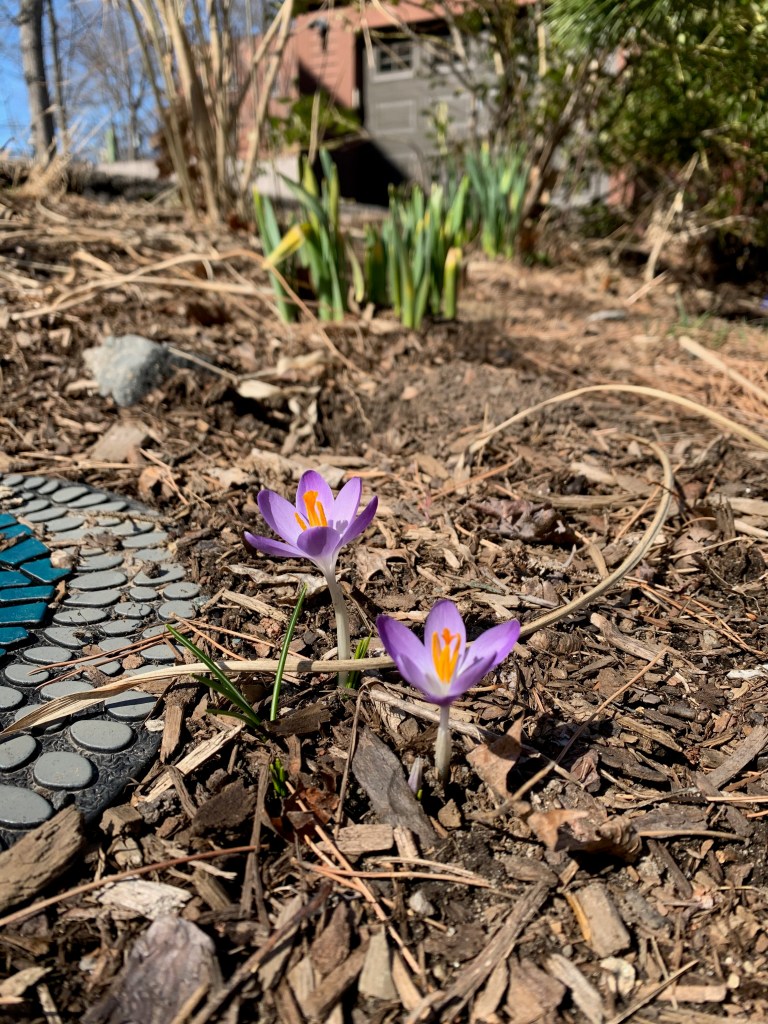
- Scientific genus: Crocus
- Height: 2-4”
- Purple or white are the most common. But you can find yellows, oranges, and pinks.
- Likes full sun and neutral, well-draining soil.
They follow snowdrops pretty quickly. Companion plant with hellebores for a big jump-start to flowers early in the season. They can even be planted in your lawn with a bulb planter because the blooms and foliage die back before you ever have to mow. You’ll see a lot of sites say they won’t be bothered by hungry mammals, but I’ve found that not to be the case. I’ve had the bulbs dug up, or the buds nibbled down to the ground. Crocus tommasinianus is thought to be the least tasty, which is why I’m using it in my garden this year. I’ll give a full report on how it does in the spring.
Grape Hyacinth
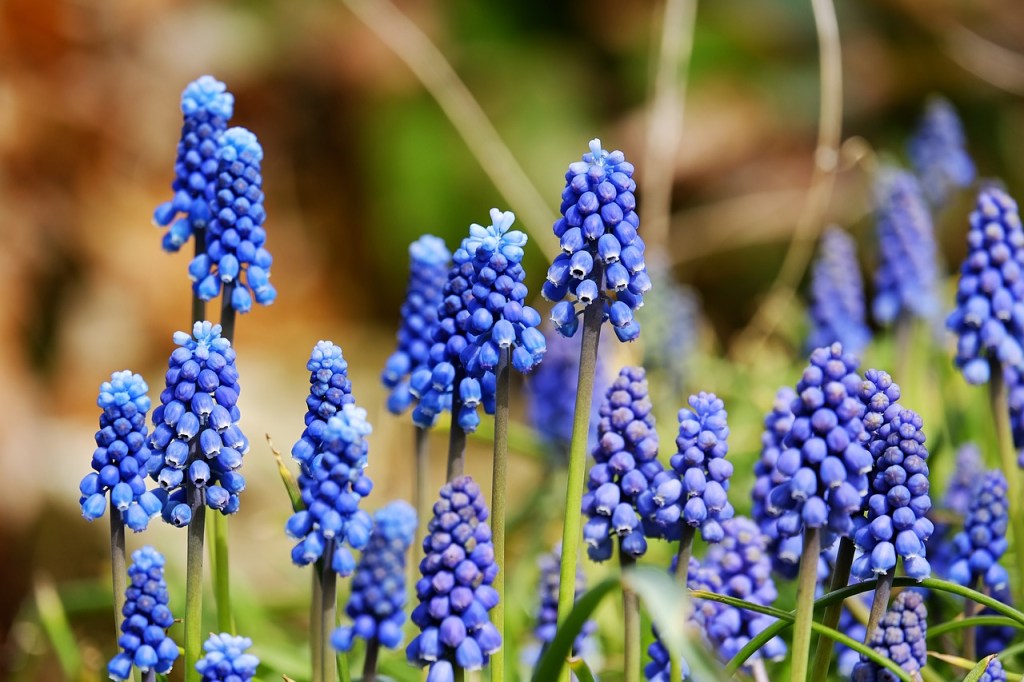
- Scientific genus: Muscari
- Height: 4-8”
- Small purple, bell-shaped florets on a stalk, surround by long floppy leaves
- Likes full-partial sun and neutral, well-draining soil.
Muscari can pop up in early spring, and last through the season. This is a great little flower to let naturalize (aka let it spread where it wants) because it creates a sea of purple blooms. There’s a famous planting of muscari in the Netherlands called “the Blue River” because of the way it meanders next to a pathway.
Daffodils


- Scientific genus: Narcissus
- Height: varies from 8-30”, depending on the variety
- Sunny yellow with a long trumpet emerging from the center. Other colors include oranges, whites, and creams.
- Likes full sun and neutral, well-draining soil.
Oh daffs. Their happy little blooms following the path of the sun each day (which is important to remember. Plant them in a place where they will face you). Like crocus or muscari, planting them in big patches really shows off their beauty. You’re probably familiar with the all-yellow ones, but there’s so many other combinations – yellow petals with orange trumpet, white petals with yellow trumpet, and all white, to name a few. Mine did not come back as vigorous as the past few years, so I will be digging them up and seeing if any of them need dividing; that helps the plant keep growing for years to come.
Hyacinth
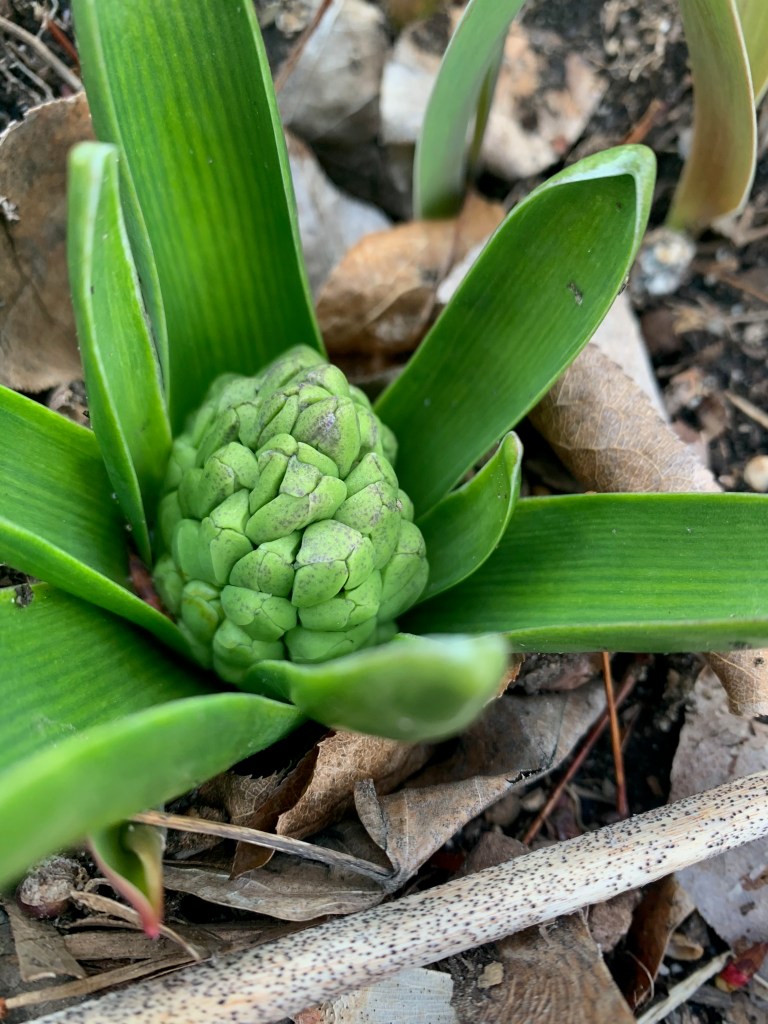
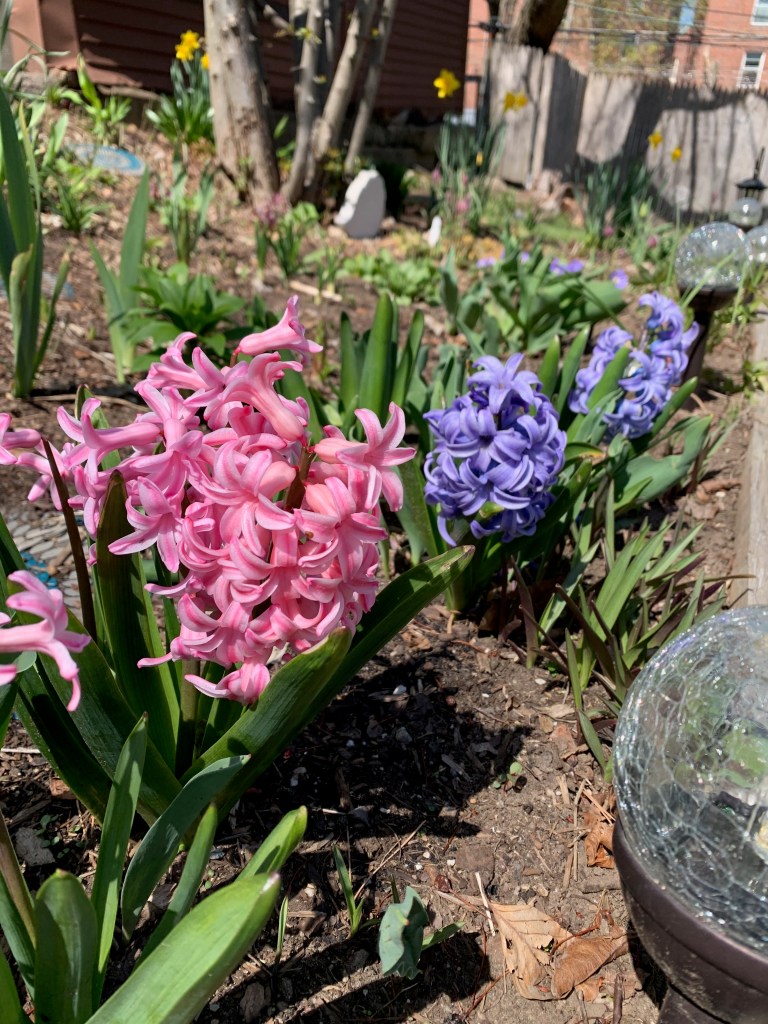

- Scientific genus: Hyacinthus
- Height: 8-10”
- Originally a pale blue-purple, hyacinths now come in a rainbow of colors, including lilacs, pinks, white, cobalt blue, and cream.
- Likes full sun and neutral, well-draining soil.
They may be small in stature, but they add the wow factor in the garden with their unmatched scent, which is rare in the early spring weeks where the rest of the plant world is only starting to wake up. Because they are so short compared to daffodils and tulips, make sure to plant these near the front of your garden to full enjoy them.
Tulips
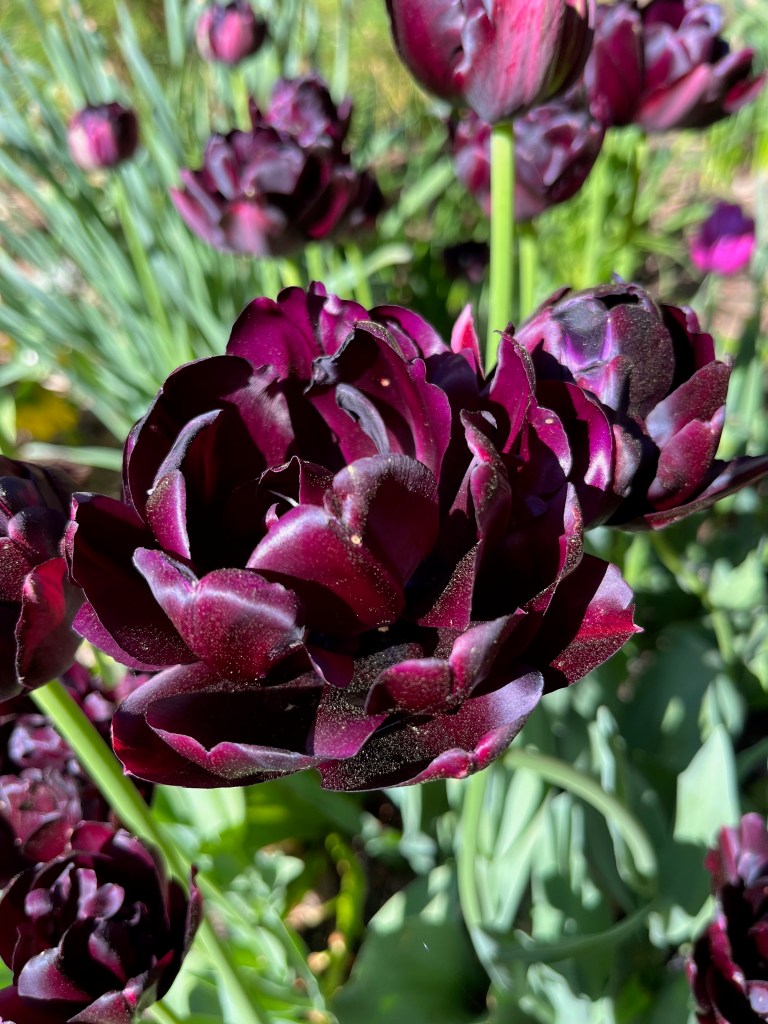
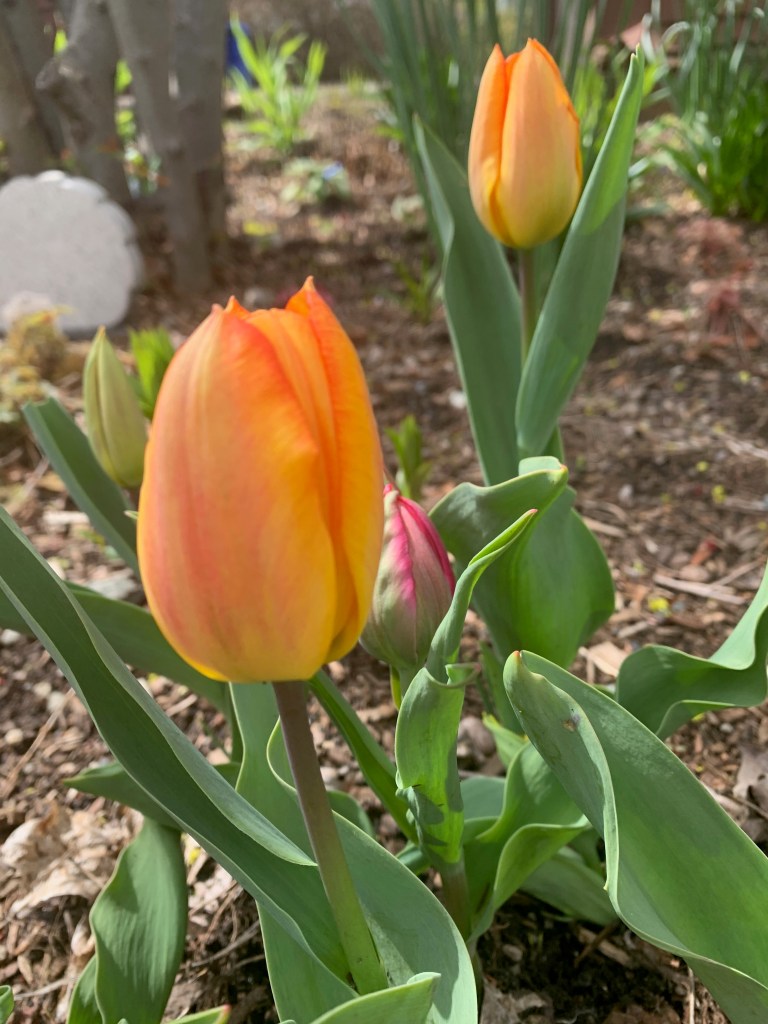
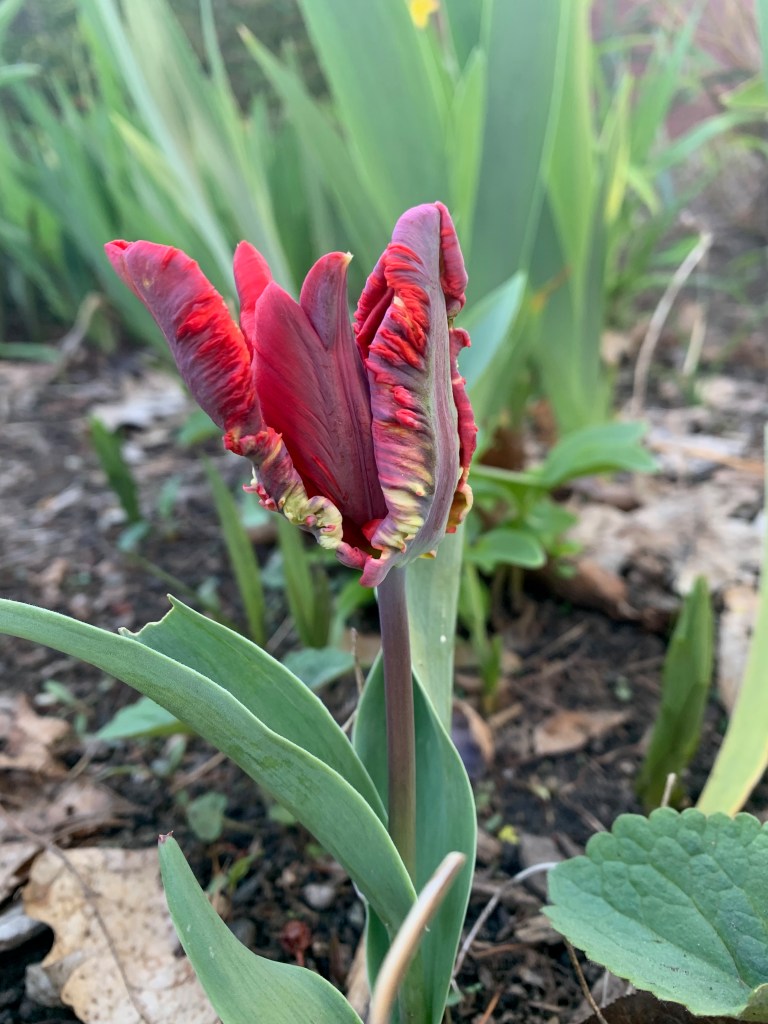
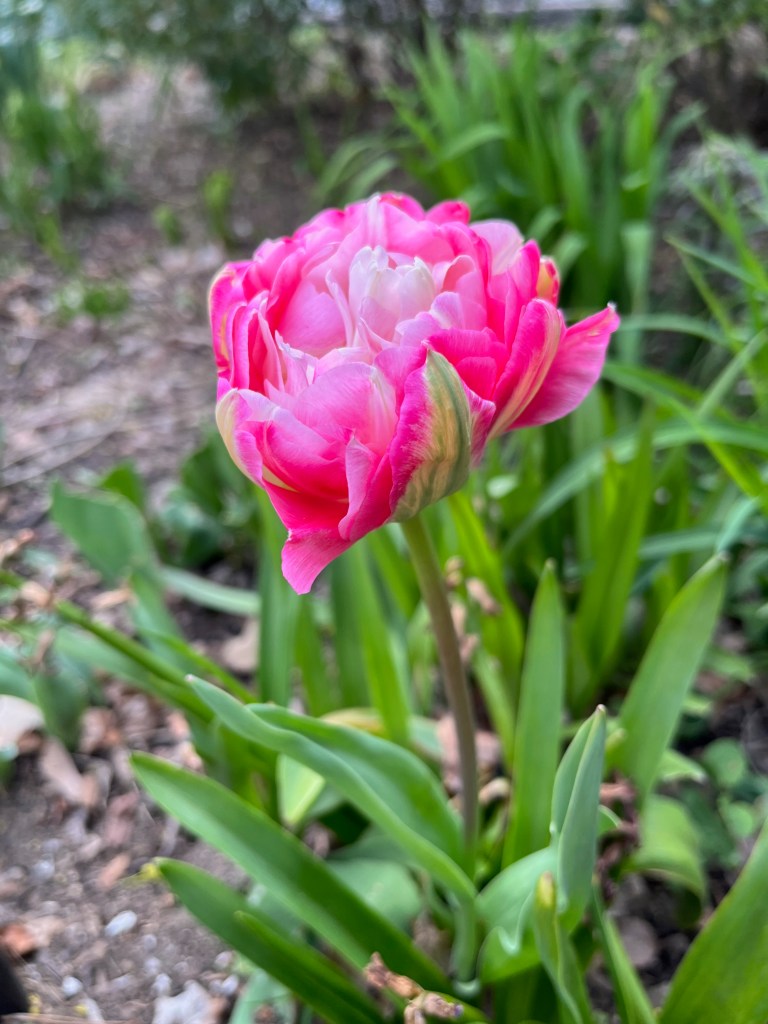
- Scientific genus: Tulipa
- Height: 6-24”
- Any color you can possibly imagine
- Likes full sun and neutral, well-draining soil
When you think of spring flowers, you think tulip. Their flower shape is iconic and with so many varieties to choose from, you can create your own evocative landscape anywhere. Each variety has its own unique height and bloom time:
- Triumph – the classic tulip. They can be further classified into early, mid, or late season
- Single Early – similar to the Triumph, but the bloom tends to open up much more. As the name implies, they are early season
- Single Late – Like the Single Early, but late season
- Double – these have several rows of petals, so look like peonies. Early, mid, or late
- Greigii – pointed petals with contrasting color stripe in the center of each petal. Early to mid
- Darwin Hybrid – midseason and the hardiest bulbs, so they will come back for a few years
- Fringed – they have frizzy edges, like fringe on a skirt. Tend to be mid-late season
- Parrot – like the Fringed, they have feathered petal edges. Can be Double or Single, mid to late
- Viridiflora – very rare and unique – petal are green, in combination with a second complementary color. Late season
Iris
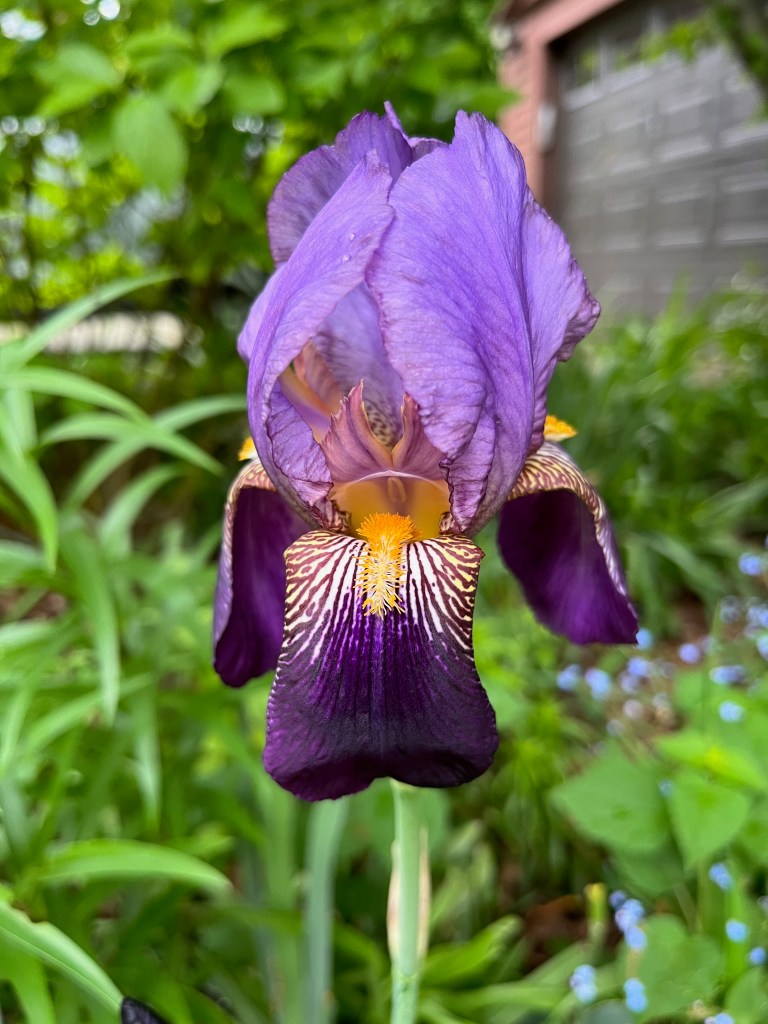
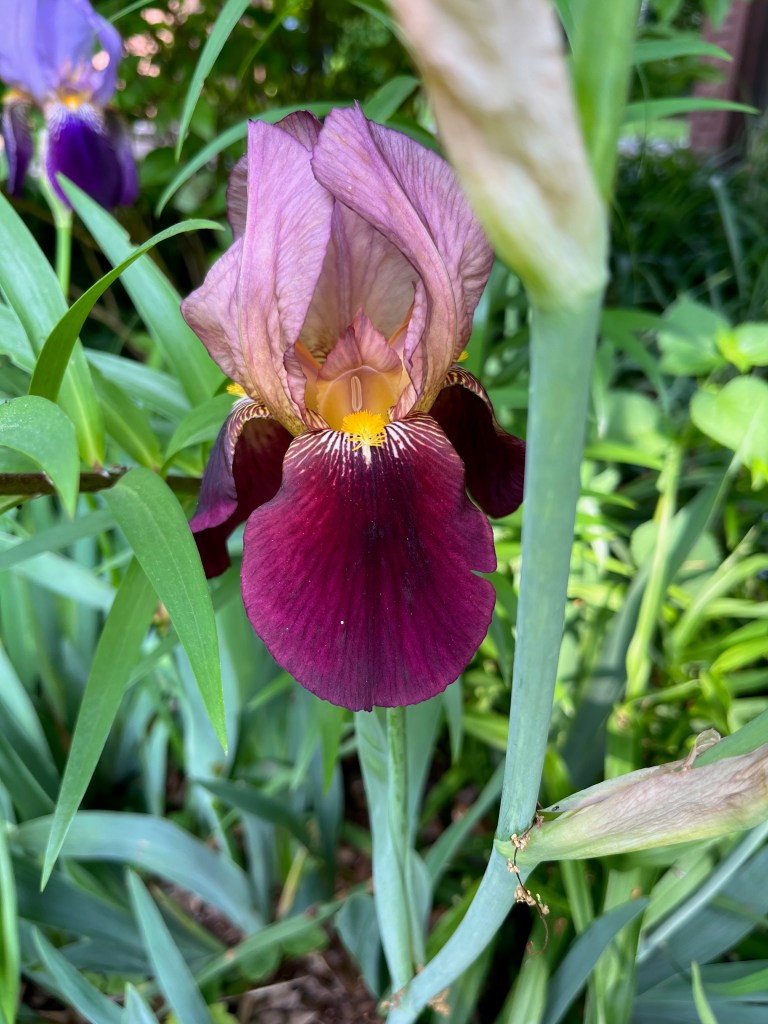
- Scientific genus: Iris
- Height: Bearded can grow 24-36”; Siberian up to 24”
- Blue, purple, white, orange, yellow, and multicolored
- Likes full sun and neutral-slightly acidic, well-draining soil.
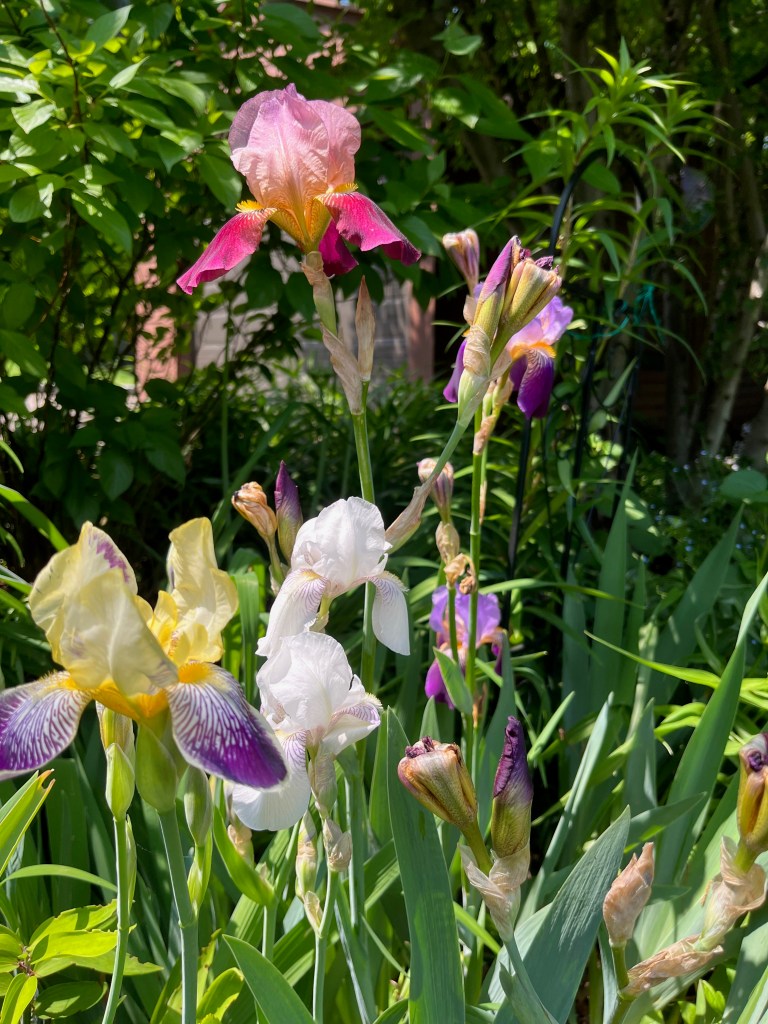
I have grown in my appreciation of iris in the past three years. Their distinctive six-petaled flowers have three outer hanging petals and three inner upright petals, which make them a unique looking bloom in the garden. They come on in late spring and into early summer, just when the last of the main spring flowers are dying down. They can be pricey, so choose wisely and buy one or two varieties for maximum impact.
Allium
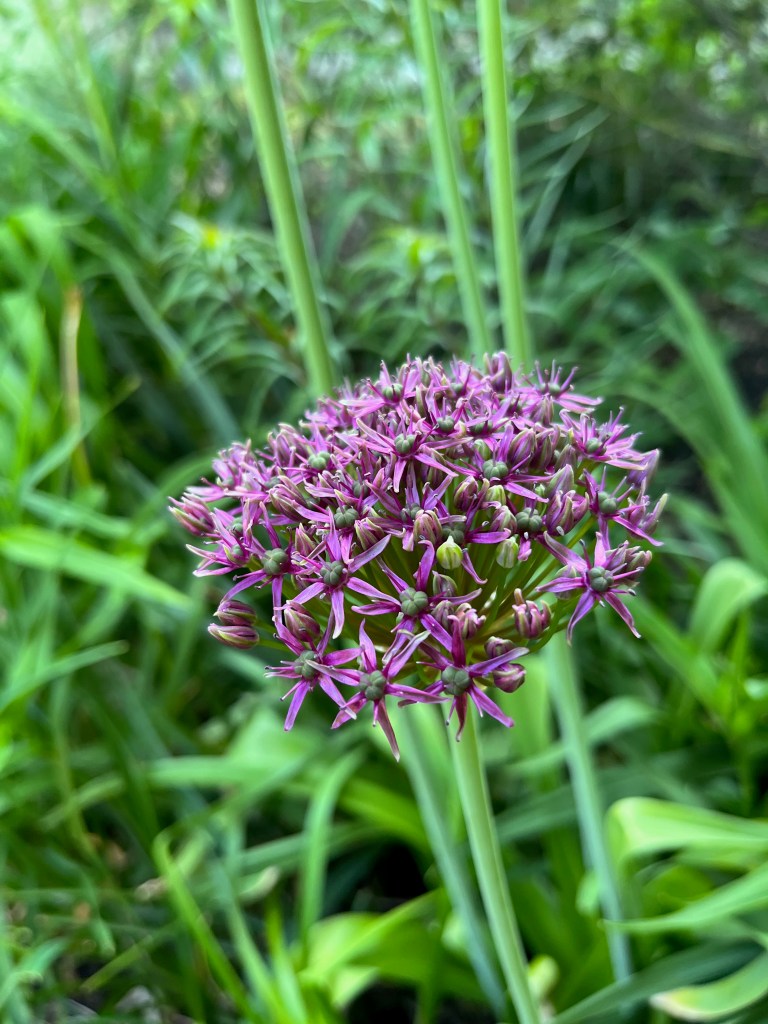

- Scientific genus: Allium
- Height: 12-36” depending on the variety
- Most are purplish-pink, they also come in white, blue, and yellow
- Likes full sun and neutral, well-draining soil.
These, like the iris, are a great way to transition from spring to summer, and a great companion plant to iris. In my garden, I have ‘Summer Drummer’ and ‘schubertii’ which are on the shorter side, but some like ‘Ambassador’ and ‘Gladiator’ can grow 3-4 feet high. Another bonus, since they’re part of the onion family, mammals won’t touch them.
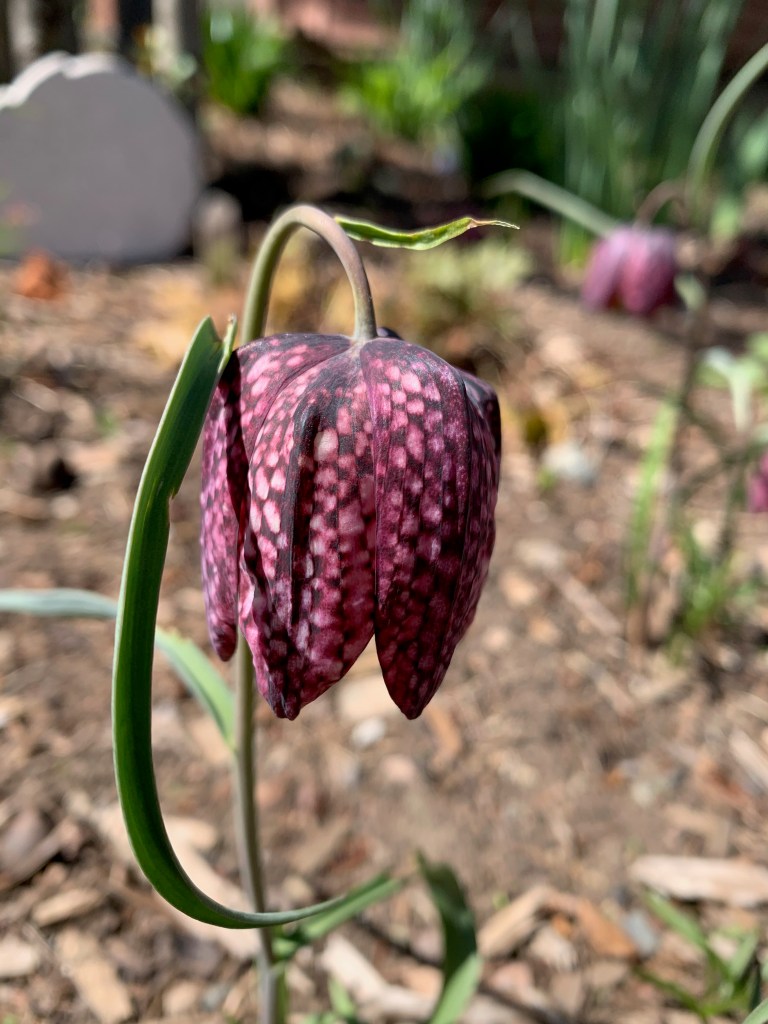
What does my garden contain? All of these photos are from the larger plot of the garden. And I have two more less common flowers that I love. One is the windflower [Anemone]. It’s a cute little 4-6″ blue-purple flower that is happy in full sun or partial shade. The other is a fritillaria [Fritillaria meleagris] also called snake’s head. I’ve nicknamed it the Tim Burton flower because of the checkerboard pattern on the petals. It looks like a drooping tulip, but it’s actually in the lily family.

Your Spring Ahead
This is a lot of knowledge, and it can be overwhelming, but to simplify things try buying (in bulk) two different flowers that bloom at different times, with similar colors, and see what that looks like come spring. Like hyacinth and a mid-season tulip. Or daffodils and late-season tulip.
See what that looks like. Does it give you the thrill you were looking for? If not, next autumn you can add something new to the mix, fill in for the week or two gap between blooms, or add an additional pop of color (think a late-season yellow tulip between an early season purple and the much later allium). Spring 2023 was spectacular in my garden with tulips, but the following year I didn’t have many come back, most likely because of the dampness of the soil which will rot out a lot of bulb varieties. So, I’m course-correcting now with two bulk boxes of my favorite colored tulips.
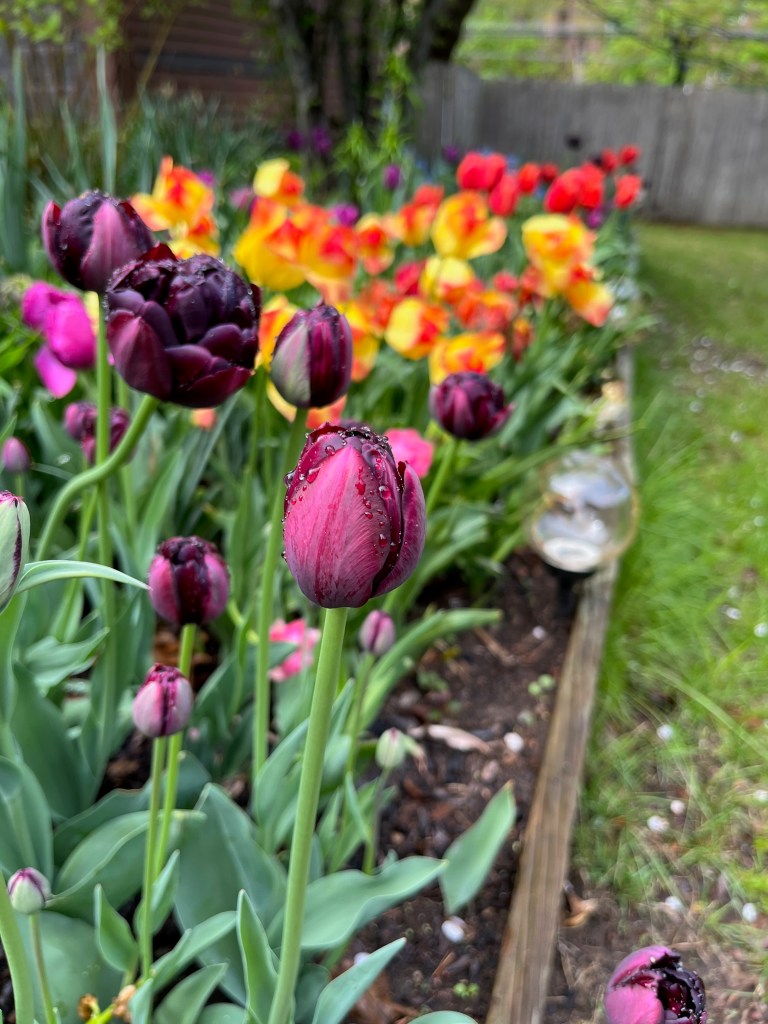
Gardening is a beautiful and fragrant long-game. Relax knowing you can keep adding to the learning process year after year, and it will always be beautiful.



Leave a reply to Baylee Jennings Cancel reply